
How the US Navy Tapped a Soviet Undersea Cable for 10 Years
A submarine rebuilt for deep-sea divers, a warning sign on a Soviet beach, and a recorder that read a cable without cutting it.

Shorts from this video
A cable under a closed sea
In October 1971, USS Halibut entered the Sea of Okhotsk on a mission to find a Soviet naval telephone cable. American intelligence could already intercept radio, but the Navy suspected more revealing conversations ran along a cable between the submarine base at Petropavlovsk and the fleet headquarters at Vladivostok. Moscow barred foreign ships from the sea and had placed detection devices on the bottom.
Captain James Bradley of the Office of Naval Intelligence reasoned that the cable would need protection wherever it came ashore. A fishing boat could drag an anchor across it, so he expected a warning sign. Halibut moved along the coast at periscope depth until the crew spotted a sign on the northern shore telling ships, in effect, to keep their anchors clear. They followed the line out and found it in about 400 feet of water.
A submarine built for divers
Halibut had originally been a nuclear-powered missile boat. Its rebuilt aft deck carried a large cylinder billed as a simulator for a deep-submergence rescue vehicle. In practice it was a pressure chamber. At the depth of the cable, dissolved gas in a diver’s body had to come out slowly during ascent. By living in the chamber at the working pressure, the divers could leave and return between shifts and decompress once at the end. The Navy had developed the method, known as saturation diving, in its SeaLab experiments.
The cover mission was to retrieve fragments from Soviet anti-ship missile tests. The divers did recover wreckage, enough for analysts to determine that the missile used radar alone to find its targets.
A recorder outside the cable
The tap picked up the signal by induction. As the electrical signal in the cable changed, so did the faint magnetic field around it. A coil in the device picked up a copy of that signal from outside the waterproof armor. The divers could leave the original wires intact, and the cable continued to work. About a dozen lines shared the cable. The recorder took them down on tape for analysts to separate later. The tap was designed to drop away if the cable was raised for repairs.
Published accounts say much of the traffic was unencrypted. They suggest Soviet officers trusted the cable because they believed nobody could reach it. The Navy kept coming back for tapes, first aboard Halibut and later with Seawolf and Parche. The later pod on the cable was about 20 feet long. A second tap went onto a cable in the Barents Sea near the Northern Fleet’s bases.
The missing pod
Ronald Pelton, a former National Security Agency analyst in debt, approached the Soviet embassy in Washington in January 1980. He told the KGB about US eavesdropping programs, including the Okhotsk tap. Published accounts put his payments at about $35,000.
In 1981, US satellites saw ships gathered over the tap, including a salvage vessel. When Parche sent divers to the cable, the pod was gone. In 1985, the defection of the KGB officer Vitaly Yurchenko helped the FBI identify Pelton. He was arrested that November and convicted of espionage in 1986. He received three life sentences and was released in 2015.
Much of Ivy Bells remains classified. Accounts disagree on how often the Navy collected the tapes and where the recovered pod was put on display in Moscow. The route on the map is schematic and the warning sign is paraphrased from Russian.
Archive material
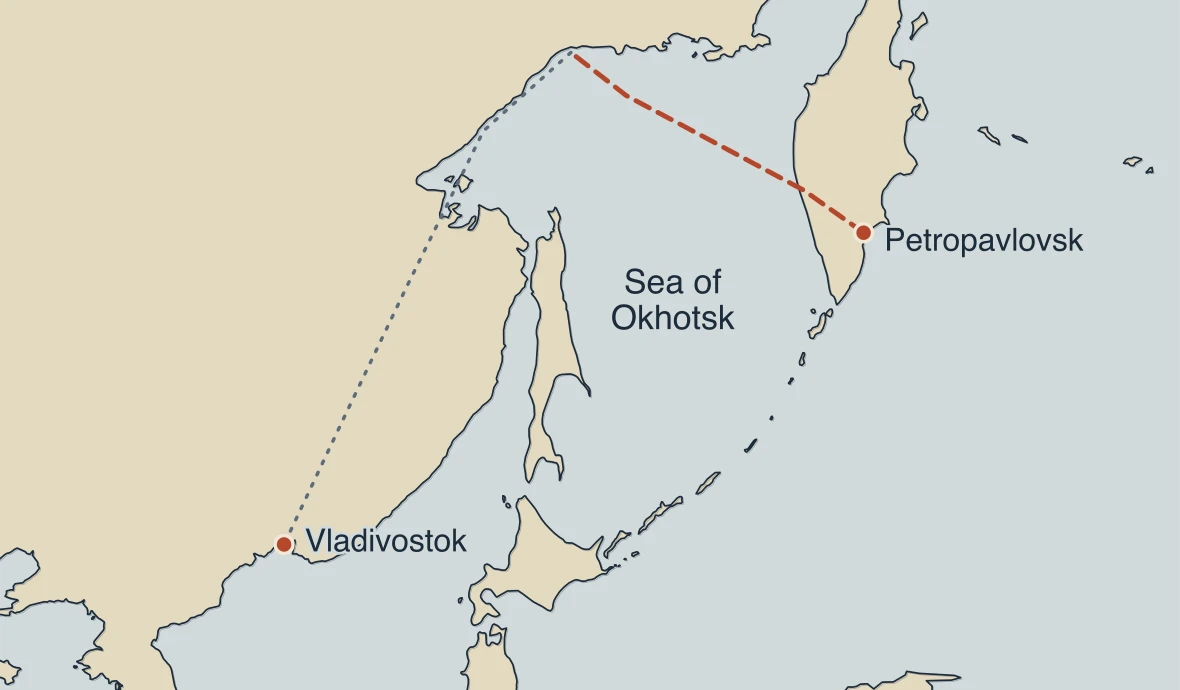
The cable route is schematic. Coastlines from Natural Earth.
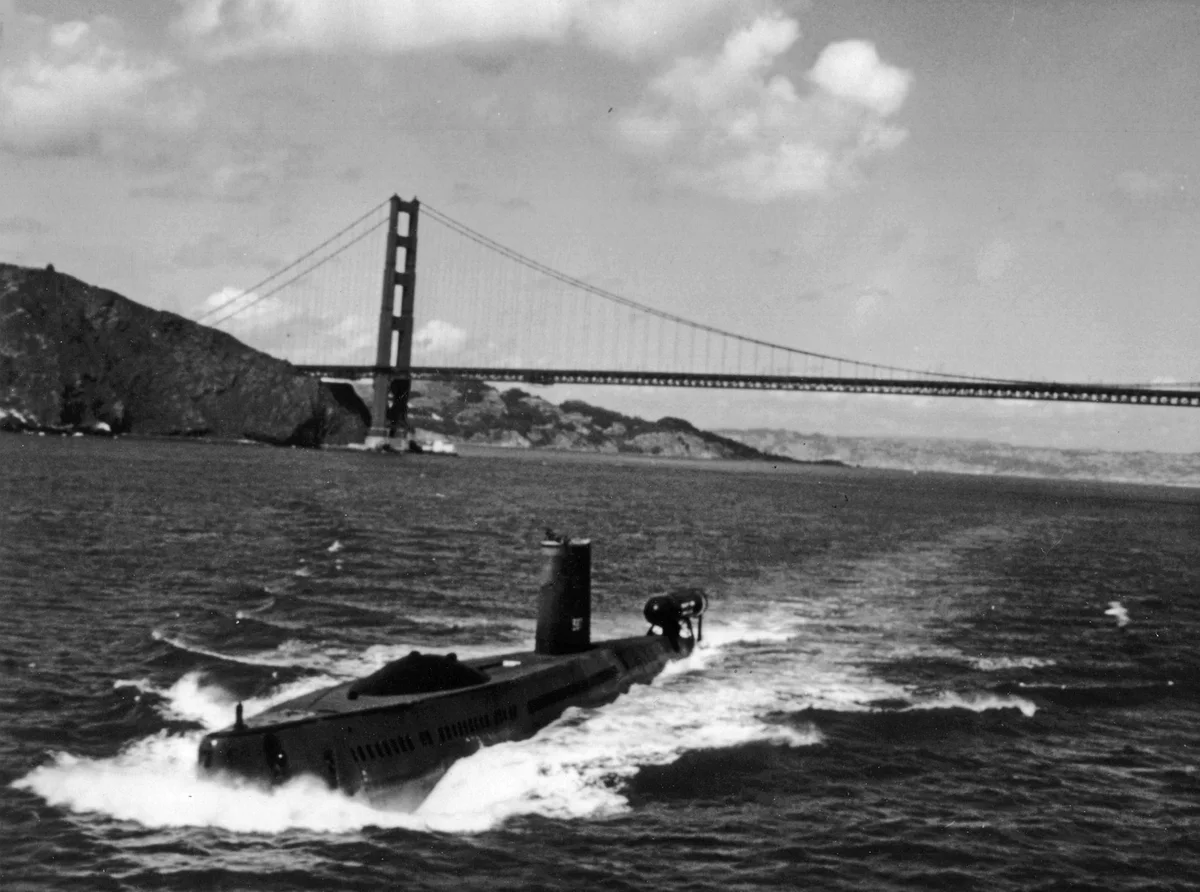
The cylinder on the aft deck housed the divers.
U.S. Navy · http://www.navsource.org ·Public domain

What we know and how
Much of the operation remains classified. Later accounts often draw from Sherry Sontag and Christopher Drew’s Blind Man’s Bluff (1998). The links below are the sources consulted for this account.
- Operation Ivy Bells · Wikipedia
- Silent Seas · Today I Found Out
- Spy Tech: The Underwater Wire Tap · Hackaday
- Operation Ivy Bells · Military.com
- USS Halibut · H. I. Sutton
- Operation Ivy Bells · The National Interest
- Ronald Pelton’s release · Federation of American Scientists
- Ronald Pelton obituary · Stars and Stripes
- Longest prison sentence served for espionage · Guinness World Records